Skip to Main Content
Brown University
School of Public Health Brown University

Pandemic Center

Search Menu

Site Navigation

  • Pandemic Center
  • About
    • Team
    • Connect
    • Annual Reports
  • Our Work
    • Tracking Report
    • AWARE
    • Outbreak Observatory
    • Biosecurity Game Changers
    • HLIP on Pandemic Preparedness & Response
    • Africa Health Security Index
    • The Clean Indoor Air Initiative
  • Tracking Report
    • Newsletter Archive
  • News
  • Publications
  • Events
Search
Pandemic Center
Date September 10, 2026
All News
Share
Facebook Twitter_X Linkedin Email

Backed by an Award from the Andrew Carnegie Foundation, the Brown Pandemic Center Launches a New Fellowship to Advance Global Biothreat Reduction, New Cohort Announced

The 2026-2027 cohort of Fellows.

PROVIDENCE, RI — The Pandemic Center at Brown University’s School of Public Health, in partnership with key global health and security organizations, today announced that it has chosen a new cohort for a fellowship program aimed at reducing biological threats and strengthening biosecurity capacity and expertise. This program, Advancing Biological Threat Reduction in Africa, which builds on the Pandemic Center’s Biosecurity Game Changers Initiative, is made possible with the support of a generous award from the Andrew Carnegie Foundation.

Said Tade Akin Aina, the Senior Program Director of the International Program at the Andrew Carnegie Foundation: “The recruitment and rigorous preparation of the threat reduction fellows is a major step in strengthening the capacity of African countries and institutions in building formidable threat-reduction human resources that advance the safety, security and peace of not only Africans but also the rest of the world. The Andrew Carnegie Foundation is proud to be supporting Brown University’s Pandemic Center in this important work.”

A signature component of this initiative will be three separate year-long fellowships — intensive, paid post-graduate placements that select a core group of top participants from the virtual training cohort and place them directly into operational roles within key partner organizations for a full year. Placements will be at leading organizations focused on biological safety, health security, and pandemic preparedness. In the first year (2026-2027), seven fellows will be placed within six organizations: 

  • Africa Centres for Disease Control and Prevention (Africa CDC)
  • United Nations Office for Disarmament Affairs (UNODA) Biological Weapons Convention Implementation Support Unit, together with the United Nations Institute for Disarmament Research (UNIDIR); 
  • Coalition for Epidemic Preparedness Innovations (CEPI);
  • International Biosecurity and Biosafety Initiative for Science (IBBIS);
  • Resilience Action Network International (rani); and 
  • Brown Pandemic Center

Brown Pandemic Center Senior Advisers and Professors of the Practice Beth Cameron and Wilmot James, who lead the Center’s work on this initiative, said: "Through this fellowship program, we are empowering the next generation of African biosecurity leaders to make an impact on specific policies on the Continent, working with leading organizations that can help them make that happen. The Pandemic Center is thrilled to partner with organizations and agencies at the leading edge of biosecurity and defense against biothreats to host these rising leaders."

2026-2027 Fellows

Adam Abdullahi, International Biosecurity and Biosafety Initiative for Science (IBBIS)

Adam Abdullahi, Ph.D., is a health specialist and infectious disease researcher whose work focuses on vaccines, diagnostics, medical countermeasures, and epidemic preparedness, particularly for emerging and epidemic-prone diseases in Africa. He is a Tenure-Track Fellow at the Institute of Human Virology Nigeria and a Departmental Associate at the Harvard T.H. Chan School of Public Health and has held fellowship appointments at the University of Cambridge and the WHO Hub for Pandemic and Epidemic Intelligence/Charité Center for Global Health.

With IBBIS, Adam will support initiatives focused on ensuring DNA synthesis is safeguarded while aiding IBBIS’ cross-cutting engagements with policymakers and intergovernmental organizations (IGOs).

Adam Abdullahi stands before a poster with a black background and orange text which is blurred


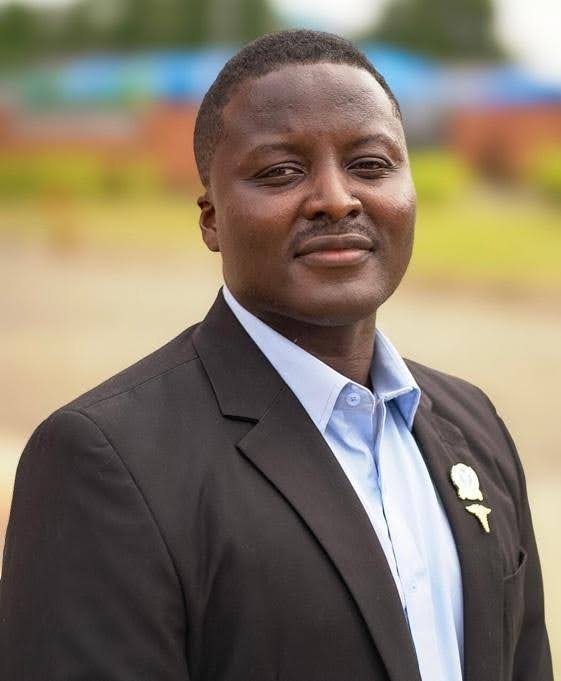
Valentin Disashi, Coalition for Epidemic Preparedness Innovations (CEPI)

Valentin Disashi Nyongangandu, M.Tech,  is an engineer and biosecurity expert serving as the Technical Manager of High Containment Laboratories (BSL‑3) at the National Institute of Biomedical Research (INRB) in Kinshasa, Democratic Republic of the Congo since 2019.

Valentin will support CEPI's efforts to translate global biosecurity priorities into operational impact in Africa, with a focus on influencing specific policy developments that advance a safe and secure 100 Days Mission.

Valentin Disashi Nyongangandu


JohnBaptist Galiwango, Africa Centres for Disease Control and Prevention (Africa CDC)

JohnBaptist Galiwango, M.S., is a biosafety and biosecurity professional with over five years of national and international experience. He is currently a Biosafety Officer at the Uganda National Council for Science and Technology (UNCST) under the Ministry of Science, Technology and Innovation, Office of the President. JohnBaptist supports Uganda’s national biosafety and biosecurity regulatory and governance system by developing regulatory frameworks, monitoring and inspecting biotechnology, Science, Technology, and Innovation activities for compliance with national and international Biosafety and Biosecurity standards, and providing administrative, and secretarial support to the National Biosafety Committee.

JohnBaptist will support implementation and policy development in Africa around core goals of the Africa CDC Biosafety and Biosecurity Strategy (2026), emerging technology risk reduction in Africa, and laboratory biosecurity and biosafety. Fellows may also support Africa CDC Regional Coordination Centres (RCCs) in developing and implementing biosecurity and biosafety policies as a core element of disease prevention, detection and response.

JohnBaptist Galiwango


Musonda Mandona, Africa Centres for Disease Control and Prevention (Africa CDC)

Musonda Mandona, B.S., is a Zambian Biorisk Management and Biosecurity Policy Expert with over a decade of experience advancing biosecurity, health security, and biological risk governance in Africa. She currently serves as a Biosafety and Biosecurity Advisor at the Ministry of Health, Zambia, where she leads initiatives to strengthen national biosafety and biosecurity systems through policy development, capacity building, and multisectoral coordination.

Musonda will support implementation and policy development in Africa around core goals of the Africa CDC Biosafety and Biosecurity Strategy (2026), emerging technology risk reduction in Africa, and laboratory biosecurity and biosafety. Fellows may also support Africa CDC Regional Coordination Centres (RCCs) in developing and implementing biosecurity and biosafety policies as a core element of disease prevention, detection and response.
 

Musonda Mandona


Joyce Masvaya, Resilience Action Network International (rani)

Joyce Fati Masvaya, M.A., MPH, widely known as “Joy the Science Diplomat,” is a Zimbabwean global health security professional working at the intersection of biological risk governance, emerging technologies, science and policy. She is particularly interested in strengthening biosecurity systems in Africa and translating scientific and policy frameworks into practical approaches that can be implemented at national and regional levels. Joyce is the Founder and CEO of Biodefenders Africa Network (BAN), an independent African policy institute advancing responsible governance at the nexus of biology, artificial intelligence, and emerging technologies for health security, peace, and sustainable development.

Working with rani, Joyce will contribute to a project at the heart of European policymaking, as part of a team working to help introduce biosecurity guardrails at the European Union-level, particularly around emerging biotechnologies, with a particular focus on nucleic acid synthesis screening. This project will involve working within a growing ecosystem and at the cutting edge of helping solve these policy challenges in the EU can help inform future policymaking and regulation in Africa.
 

Joyce Fati Masvaya


Cyrille Kablan Nouoma, the United Nations Office for Disarmament Affairs (UNODA) Biological Weapons Convention Implementation Support Unit, and the United Nations Institute for Disarmament Research (UNIDIR)

Major Cyrille Kablan Nouoma, M.S., is a Ghanaian military officer, Medical Laboratory Scientist and Forensic Analyst. He works at the Molecular, Forensics and Research Laboratory of 37 Military Hospital, Ghana’s designated National Disaster and Emergency Response health facility, where he contributes to molecular diagnostics, forensic analysis and laboratory systems supporting military and civilian health preparedness, and national security. His work sits at the intersection of laboratory science, microbial forensics, biosecurity, public health and defence.

Cyrille will support the UNODA team in the delivery of a two-week joint training programme organized by the BWC Implementation Support Unit (ISU) and the Institute of Microbiology of the German Armed Forces on microbial genomics and bio forensics. He will also be engaged in ongoing work on Biological Weapons Convention (BWC) verification and the potential role of bio forensics in this context, taking into account the financial, political and technical constraints under which the Convention currently operates.
 

Cyrille Kablan Nouoma


Zakariyau Yusuf, Brown Pandemic Center

Zakariyau Yusuf, M.S., is the Executive Director of the Tech Governance Project, a nonprofit organization conducting policy research and advocacy on emerging technologies in Africa, focusing on AI and Biotechnology. In this role, Zakariyau leads many of the organization’s biosecurity policy research and advocacy projects, including landscape analysis of biorisk governance in Africa, which explored policies, challenges, and emerging trends on the continent, as well as a project examining policies and governance approaches on nucleic acid synthesis in Africa to improve stakeholders’ awareness and governance strategies.

Zakariyau will support the Brown Pandemic Center’s efforts, in partnership with global experts, to understand and mitigate the risks posed by the creation of mirror life. Zakariyau will work with scientists and science journalists on the African continent to communicate the risks associated with mirror biology to as wide an audience as possible. 

Zakariyau Yusuf


Quotes from Partners

Africa CDC is delighted to host two Biological Threat Reduction Game Changers Fellows this year, who will advance biosecurity and biosafety policy development and implementation on the African Continent. This work will support the implementation of the 2026-2030 Strategy of the Africa CDCs Biosafety and Biosecurity Initiative (BBI), which has been a pioneering innovative and transformative regional approach to biothreat reduction, and cementing stronger practical capacities in Africa to reduce accidental and deliberate misuse of biology. We anticipate the fellows will provide concrete and impactful contributions to advance our efforts, which are increasingly important at the intersection of biotechnology and biosecurity.

Mr. Zibusiso Masuku Senior Biosafety and Biosecurity Technical Officer for Africa CDC

Investing in the next generation of biological threat reduction leaders is an investment in Africa's ability to anticipate, prevent, and respond to the challenges of tomorrow. This fellowship's first cohort is already embedded within regional communities and institutions including Africa CDC, CEPI, and Gavi, shaping global biosecurity declarations. The next cohort joins the pioneering community of future generation African leaders bridging science, policy, and practice. I am delighted to welcome this next cohort of Game Changers, and look forward to seeing how that momentum will be translated into further impact across the continent and beyond."

Dr. Judy Omumbo Head of Partnership & Resource Mobilization, Science for Africa Foundation

CEPI is delighted to partner with the Brown University Pandemic Center on the Biosecurity Game Changers Fellowship. Ensuring that Global South perspectives shape biosecurity approaches for the 100 Days Mission is a core element of CEPI's biosecurity strategy, and this fellowship puts that commitment into practice. We are thrilled to host African expert Valentin Disashi, whose leadership will drive positive change across the region and advance Africa's vision of health security sovereignty, ensuring the tools and capabilities to prevent, detect, and respond to biological threats are anchored in African institutions and expertise.

Dr. Andrew Hebbeler Director of Biosecurity, CEPI

IBBIS works with global partners to strengthen biosecurity tools and norms. Being an international organisation means more than where the tools are developed, or where the norms are drafted. The Game Changers Fellowship ensures our thinking is sharpened by colleagues who know what implementation looks like in their own regions.

Dr. Piers Millett Executive Director of IBBIS

Building biosecurity is an interdisciplinary, intergenerational, and international challenge. Initiatives, such as this Fellowship, that seek to build leadership, knowledge, and networks in this area, are an important part of working towards a brighter, more biosecure future.

Dr. James Revill Biosecurity Expert

The Fellowship program’s mission to foster next generation leadership to mitigate biothreats gets to the heart of rani’s mission: to build societal resilience to get ahead of global shifts and crises. We are thrilled to have Joyce on our team, supporting our policy and advocacy work to advance biosafety and biosecurity in the EU and internationally. Through this Fellowship, she will have the opportunity to shape thinking on practical approaches for strengthened biosecurity policy across Africa.

Ms. Eloise Todd Executive Director & Founder of Resilience Action Network International (rani)

About the Pandemic Center at Brown University

The Pandemic Center at the Brown University School of Public Health works to prevent, reduce vulnerabilities, and increase resilience to pandemics, other biological emergencies, and the harms they pose to health, peace, security, and prosperity.

Media Contact:

Bentley Holt, Assistant Director of Communications and Outreach
Pandemic Center
bentley_holt@brown.edu
thepandemiccenter.org

###

Brown University School of Public Health
Providence RI 02903 401-863-3375 public_health@brown.edu

Quick Navigation

  • Newsletter
  • Visit Brown
  • Campus Map

Footer Navigation

  • Accessibility
  • Careers at Brown
Give To Brown

© Brown University

School of Public Health Brown University
For You
Search Menu

Mobile Site Navigation

    Mobile Site Navigation

    • Pandemic Center
    • About
      • Team
      • Connect
      • Annual Reports
    • Our Work
      • Tracking Report
      • AWARE
      • Outbreak Observatory
      • Biosecurity Game Changers
      • HLIP on Pandemic Preparedness & Response
      • Africa Health Security Index
      • The Clean Indoor Air Initiative
    • Tracking Report
      • Newsletter Archive
    • News
    • Publications
    • Events
All of Brown.edu People
Close Search