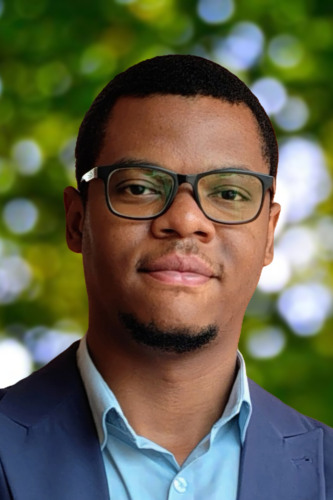
Valentin Disashi
Biography
Valentin Disashi Nyongangandu is an engineer and biosecurity expert serving as the Technical Manager of High Containment Laboratories (BSL‐3) at the National Institute of Biomedical Research (INRB) in Kinshasa, Democratic Republic of the Congo since 2019. He holds a Master of Technology in Wireless Communication and a Bachelor of Technology in Electronics & Communication Engineering from Lovely Professional University in India. An IFBA Certified Professional in Biorisk Management, Valentin oversees the operation, maintenance, and biosecurity systems of INRB’s BSL‐3 facilities, supporting national and global surveillance of high‐consequence pathogens, including Ebola.
For over 7 years, Valentin has played a central role in strengthening biosafety and biosecurity capacities across the DRC. He has led and continues to facilitate critical
capacity‐building efforts in Kinshasa and eastern DRC, a region affected by armed conflict and occupation, ensuring continuity of safe laboratory operations and resilience of public health infrastructure. He has delivered technical trainings in multiple African countries and collaborated with partners around the world on high‐containment laboratory operations, maintenance, and biosecurity.
Valentin is a member of the World Health Organization’s Technical Advisory Group on Biosafety and Biosecurity (WHO TAG‐B, since 2026) and serves on Working Group 1 (Biosecurity and Biosurveillance) of the Signature Initiative to Mitigate Biological Threats in Africa (SIMBA, since 2026). He is also an alumnus of the United Nations Office for Disarmament Affairs (UNODA) Youth for Biosecurity Fellowship 2025, contributing to global discussions on the Biological Weapons Convention (BWC). His work supports the G7 Global Partnership Against the Spread of Weapons and Materials of Mass Destruction (GPWMD), notably through biosecurity upgrade projects securing vulnerable pathogen collections in the DRC.
Valentin is committed to advancing resilient laboratory systems and strengthening biological threat reduction through science diplomacy, technical leadership, and
international cooperation.